ELEVATION 1037 FT
316 METERS
30.55295° N   97.86159° W


Overview

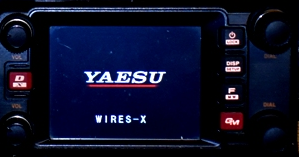
This station is located approx 25 miles NW of Austin, Texas. RF capabilities include analog VHF/UHF local and metro repeater coverage on the 2m, 70cm, and 220Mhz FM bands. VoIP digital radio communications worldwide are made possible using two WPSD hotspots making access to DMR talkgroups available from both DMR and YSF transceivers. For direct access to Wires-X® rooms and nodes,  the Yaesu FTM-400 is powered up into direct mode and a Windows PC running the Wires-X® app is used without a need for transmitting any RF because the radio's voIP packets are transmitted directly into the computer via USB and are routed to the selected Wires-X node or room under software control.

Originally licensed as callsign KD5PNN


Comments from the Control Point

The decades here at the radio table have gone by very quickly. Forty years ago, if someone had told me that some day we would be linking digital radio communication systems together over a thing called the internet, I would have thought that they were nuts!

Declining everyday local FM repeater traffic coupled with the loss of HF capability here at the shack in 2011 makes digital radio communication modes essential to this station in order to continue it's tradition of working international HAM radio stations. I often hear stations scolding others that digital radio modes "Are not real radio" because they are dependent on independent micro computers called hot spots and the internet to establish their linking.

I agree that digital modes are not practical for reliable emergency communications because they rely on delicate infrstructures that are often the first to go down during disasters. I don't do QSLs for digital QSOs unless they mark a special occassion for the other station. eg. very first contact on HAM radio, first contact on DMR, etc. Real radio to them is real radio to me. Sharing our love of radio together is the best and the most important amateur practice of all because it always leads us in a unified direction towards a greater good for everyone irregardless of our favorite modes.

Meanwhile, this busy and overstuffed barrel of 24x7 worldwide contacts, coupled with automated callsign lookup, remote station APRS info (if enabled), and the superior digital audio quality over traditional FM offers all of the benchmarks I am looking for in a 21st century amateur radio station that I can comfortably retire with while still working stations across the world.


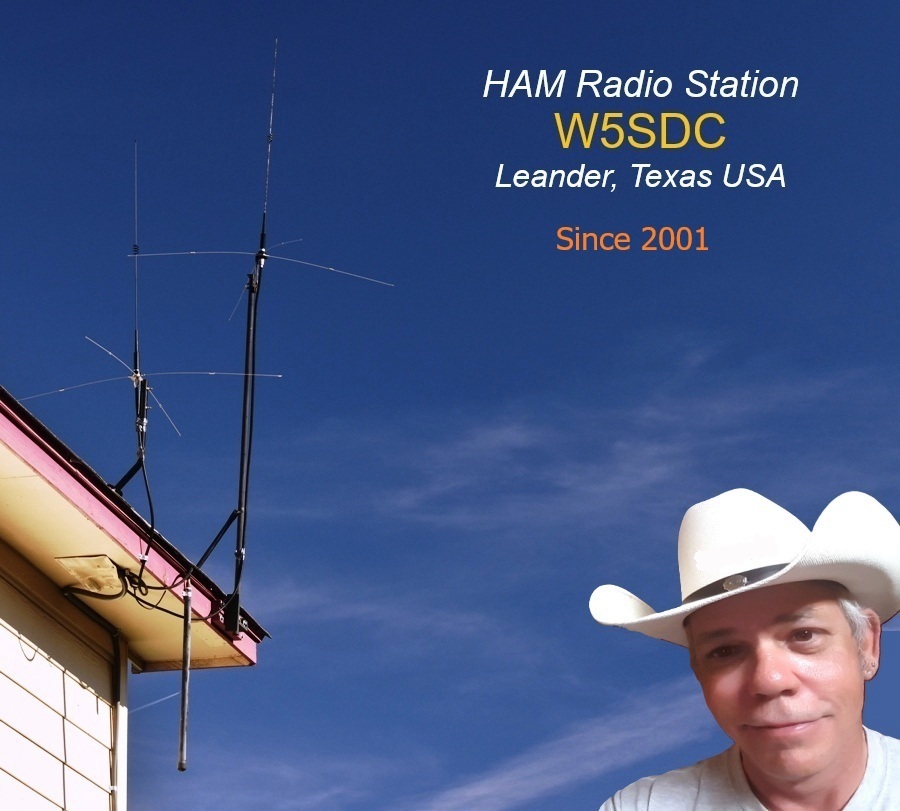
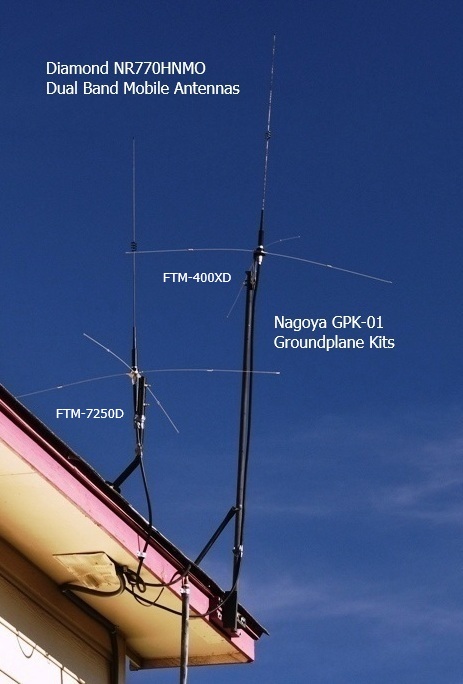
Dual band ground plane kits

The Yaesu FTM-7250D and FTM-400XD base rigs are equipped with these identical birds. They seem to be holding up well in the hot Texas sun, wind, and her occassional ice storms. They were also found to be resonant on the 220 FM band with a SWR footprint almost identical to my monoband 220 work antenna.

All of the dual band mobile antennas that I have ever tried with the GPK-01 have worked well, but the Diamond NR770 mobile antenna is the only one that I have ever found to be nicely resonant on the 220 band according to a cross-needle 220 SWR meter..


220Mhz SWR Comparison

NR770NMO Ground Plane Kit

US Call 223.5 Mhz (SWR 1:1.9)
   Primary Repeater 223.075 Mhz (SWR 1:1.1)
   Secondary Repeater 223.45 Mhz (SWR 1:1.8)


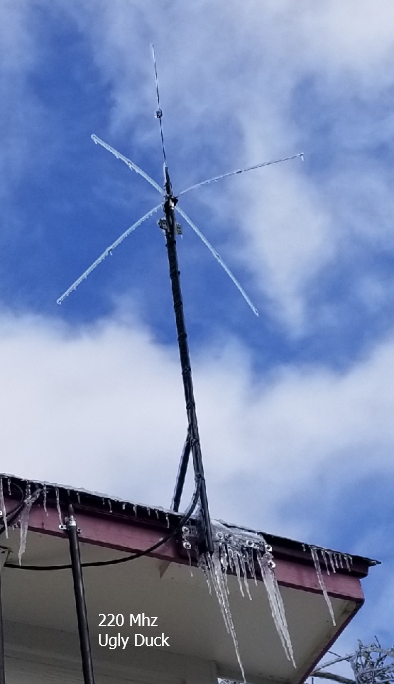
Ugly Duck 220Mhz Coaxial Dipole

US Call 223.5 Mhz (SWR 1:1.9)
   Primary Repeater 223.075 Mhz (SWR 1:1.15)
   Secondary Repeater 223.45 Mhz (SWR 1:1.6)


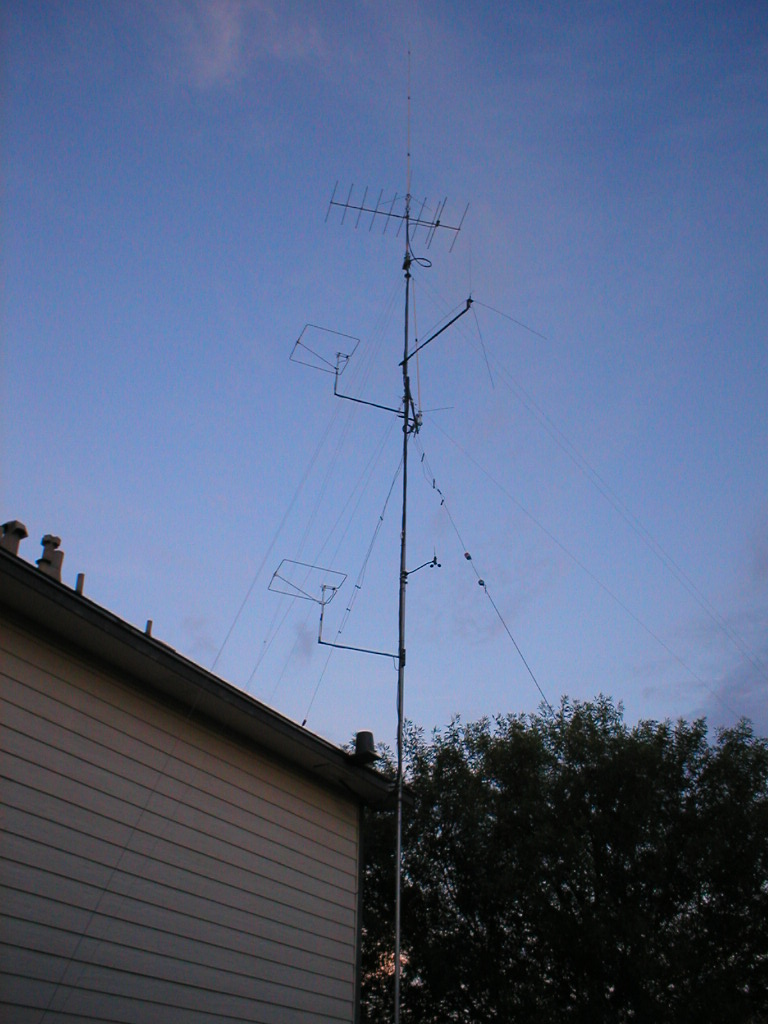
Legacy Antennas in 2004
(pre digital era on 50ft push-up pole)


TOP TO BOTTOM
Comet GP-9 * CushCraft 2m Horiz Beam * 2m/6m AM/FM Homebrew ISS packet G-plane * DXEE Multi-Band HF Dipole
* Co-phased M2 6 meter loops (34 confirmed states during big opening in 2004)


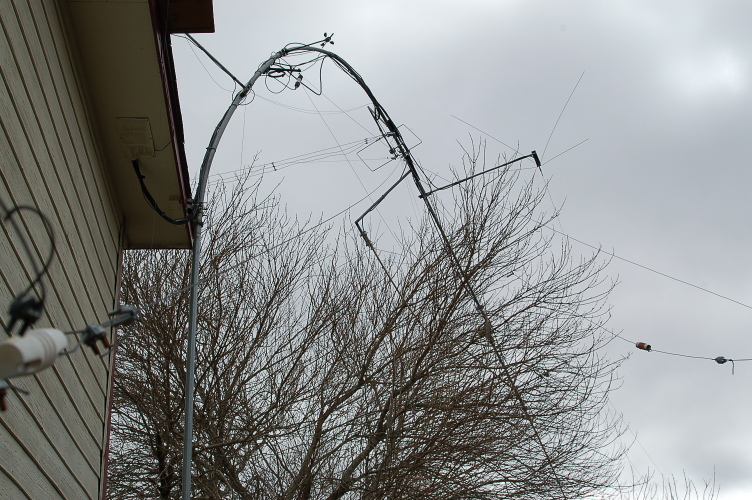
Wrecked by a winter storm blast on Feb 1, 2011. The top North guy wire snapped during a strong northerly wind gust.


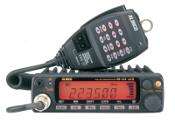
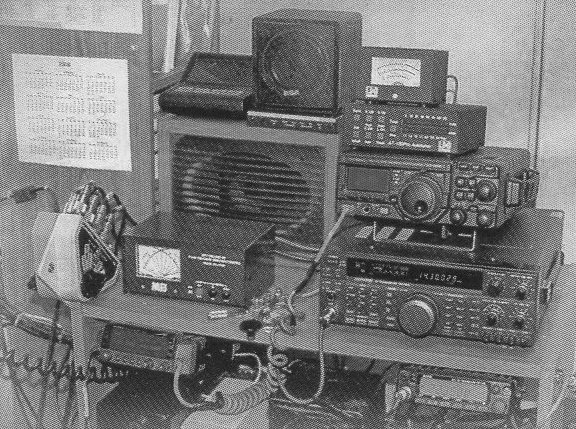
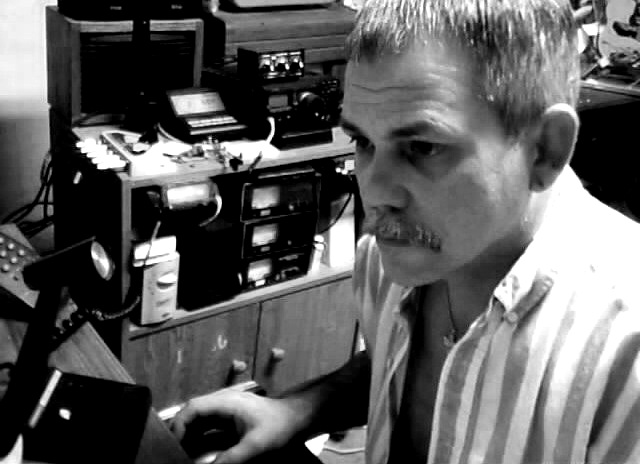
My legacy HF control point in those days. The Alinco DR-235T 220 monobander (lower right corner) is the only radio still in service today on it's monoband 1/4 λ Ugly Duck dipole.


HF operation is sorely missed, but the HOA did not approve of putting any large HF antennas back up after the wreck.

The classic Turner Plus 3 desk mic seen here serving the station's HF, 144M/70cm, and 220Mhz radios all at the same time using a modified high-end parallel printer selector switch..


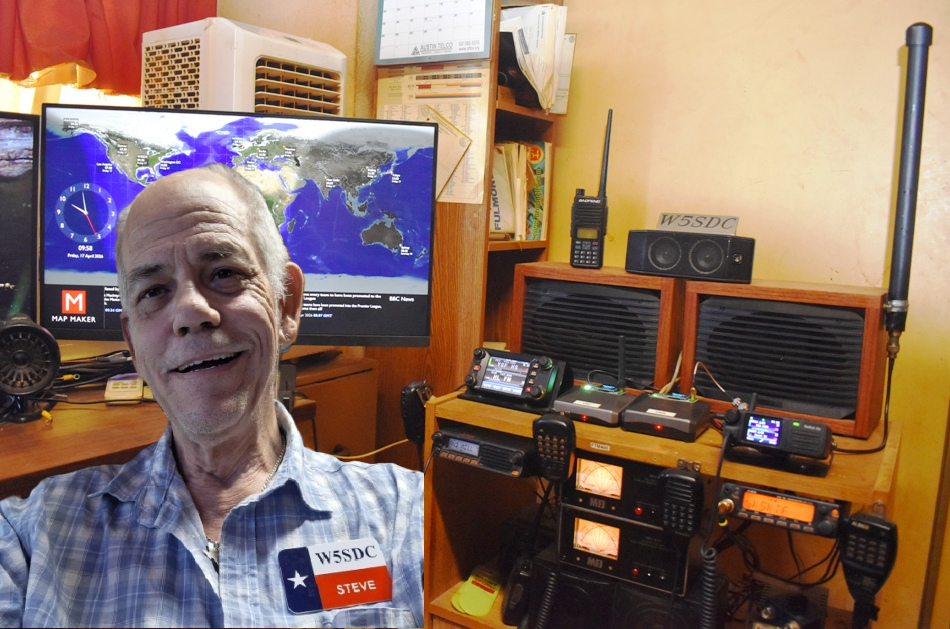
Control point here at the shack today with no dependence on HF transceivers, HF antennas, or atmospheric band openings. International contacts around the world are available 24x7. Standard FM, DMR, and YSF audio all sound superb on the red oak 6x9 coaxial speaker enclosures. No amps required.

The custom built ground planes provide good coverage for most legacy FM repeaters within a 40 to 50 mile radius.


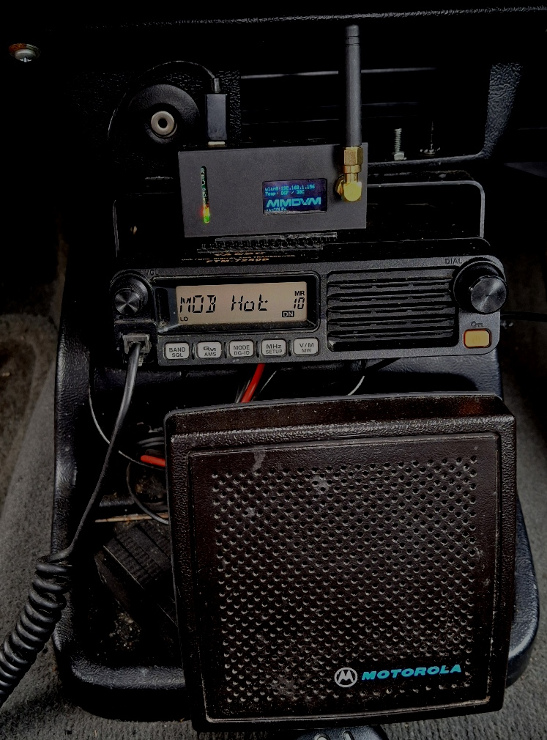
Like my base ground planes, my Yaesu FTM-7250D mobile rig is also equipped with a a Diamond NR770HNMO dual band antenna. A Pi-Star YSF to DMR hotspot tethered to my cell provides digital radio communications worldwide. The vintage Motorola external speaker still sounds great after riding mobile with me for more than 20 years.


Microphones bring many different spices to life